EBITDA Is a Moral Document
EBITDA Is a Moral Document
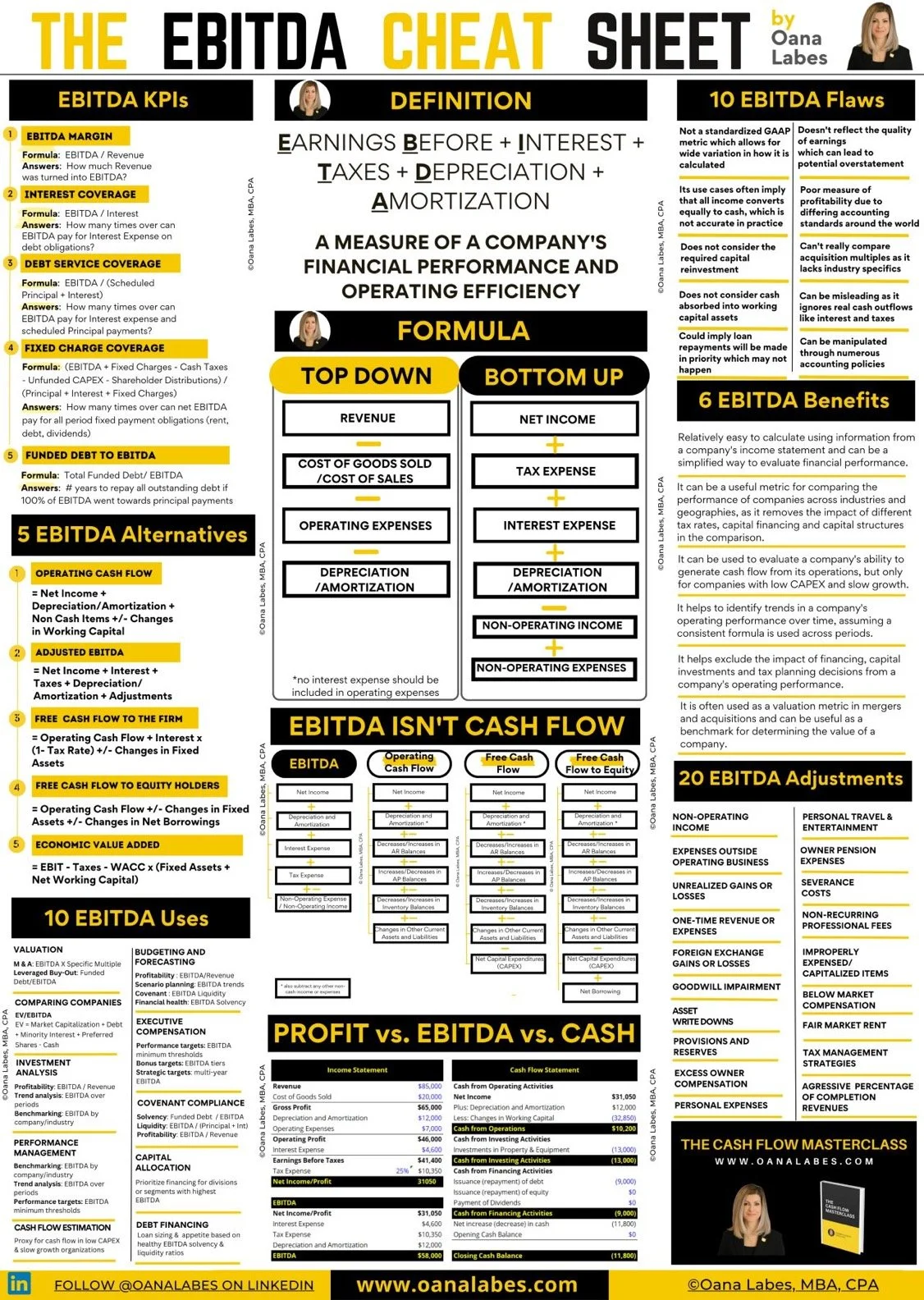
The company I led grew from about $125 million in revenue to roughly $220 million in three years. Same period, EBITDA went from about 10% to north of 20%. The numbers look like a finance story. They were not.
EBITDA is a moral document. Every "yes" and every "no" you sign as a CEO eventually shows up there. The number is just the receipt for what you actually believed in.
Most operators talk about EBITDA in the language of finance. Cost takeout, gross margin expansion, opex discipline. All accurate, none of it sufficient. What actually moves EBITDA at a mid-market company is not a finance program. It is the decision to remove the things that were not earning their oxygen, and the discipline to keep them off the books once they are gone.
What we found when we opened the boxes
In month two I asked the controller for the unprofitable SKU list. He sent me a spreadsheet with about eight hundred rows. We sold them anyway. Some because they were "strategic." Some because a particular partner cared. Some because they had been there forever and nobody had asked.
I asked for the unprofitable marketing channel list. Same pattern. We were spending real money on channels that returned 60 cents on the dollar after attribution. We had spent it for years because the channel manager had a relationship with the rep at the platform.
I asked for the headcount list by gross margin contribution. Nobody had built that view. When we did, three of the largest cost centers were running on assumptions from six years prior, when the business had a different model.
The pattern was not malfeasance. It was inertia. Nobody had asked the question. The question is the work.
The "did not earn their oxygen" test
I started using a phrase in management meetings that the team eventually adopted. We asked of every line, every program, every role: does this earn its oxygen?
The test was simple. If we removed this line item tomorrow, what would the customer notice, what would the cash notice, what would the team notice. If the answer to all three was "nothing," the line came out.
About a third of what we found could not pass the test. Not by a little. By a lot.
We cut. We did it carefully, because some of the cuts touched people. We did it publicly to the team, so the principle was understood and not just the action. We did it consistently across the next eight quarters, because the inertia comes back if you stop asking the question.
The cuts did not show up as a finance program. They showed up as EBITDA.
Where the moral document lives
The reason I call EBITDA a moral document is that it shows what the company actually values, not what the company says it values. You can write any mission statement you want. The P&L is the audit.
If a company says "we are customer-first" but spends 14% of revenue on a channel that erodes customer trust to acquire low-LTV traffic, the P&L is telling the truth and the mission statement is telling a story.
If a company says "we are operators" but cannot tell you what every line of opex returns, the P&L is telling the truth.
If a company says "we are disciplined" but the headcount has grown faster than revenue for six quarters, the P&L is telling the truth.
EBITDA is where the conviction shows up. Every leader who has run a profitable mid-market business knows this in their bones. The first-time CEO has to learn it.
How EBITDA actually moves
There are four levers, and most CEOs only pull one.
One: revenue mix. Sell more of the high-margin products to the high-LTV customers, and less of everything else. This requires a CEO who is willing to disappoint the loudest channel partner, the longest-tenured rep, and the customer who is buying the wrong thing. Most first-time CEOs are not.
Two: cost structure. Not headcount cuts. Structure. Are you paying for capabilities you are not using. Are you paying for redundancy that exists because two prior leaders did not trust each other. Are you paying for software the team logged into twice in 90 days.
Three: pricing. Most companies under-price. Not by a little. By a lot. A 3% list-price increase that holds is a 30% improvement to net income on a 10% EBITDA business. Most CEOs are too scared to test it. The ones who test it are usually surprised.
Four: working capital. The line item nobody tells the new CEO matters. Inventory turns, payables timing, receivables aging. A mid-market business where the CEO does not personally watch the 13-week cash flow is a business one bad quarter from the brink.
All four. Not one.
The discipline of "no"
The CEO job on EBITDA is not analytical. It is moral. The team will bring you a hundred good ideas every quarter. Most of them will not pass the oxygen test. Your job is to say no, often, to people you like, about ideas that sound good. You will be unpopular for it. You will also be the only person on the org chart whose unpopularity is the actual job.
A weak CEO says yes to keep the room calm. A strong CEO says no, explains why, and absorbs the disappointment. EBITDA expansion is what happens when the org learns that "no" is the default, and "yes" has to be earned.
What the number means
When you walk into a board meeting with a 20%+ EBITDA in a category where the median is 6-8%, the room treats you differently. Not because of the number, but because of what the number requires. Conviction, applied consistently, over time.
The number is the visible part. The conviction is the asset.
I did not learn this from a finance course. I learned it from saying no, hundreds of times, to people I respected, about programs I would have approved in a weaker year. That is the work.
EBITDA is a moral document. The P&L tells the truth about what you believed in. Read your own. Decide if it matches what you say.