What it would take to make eyewear iconic
A POV piece. Not a retrospective. Written May 9, 2026, the week I applied for a job that may or may not be mine, in a category nobody has cracked yet.
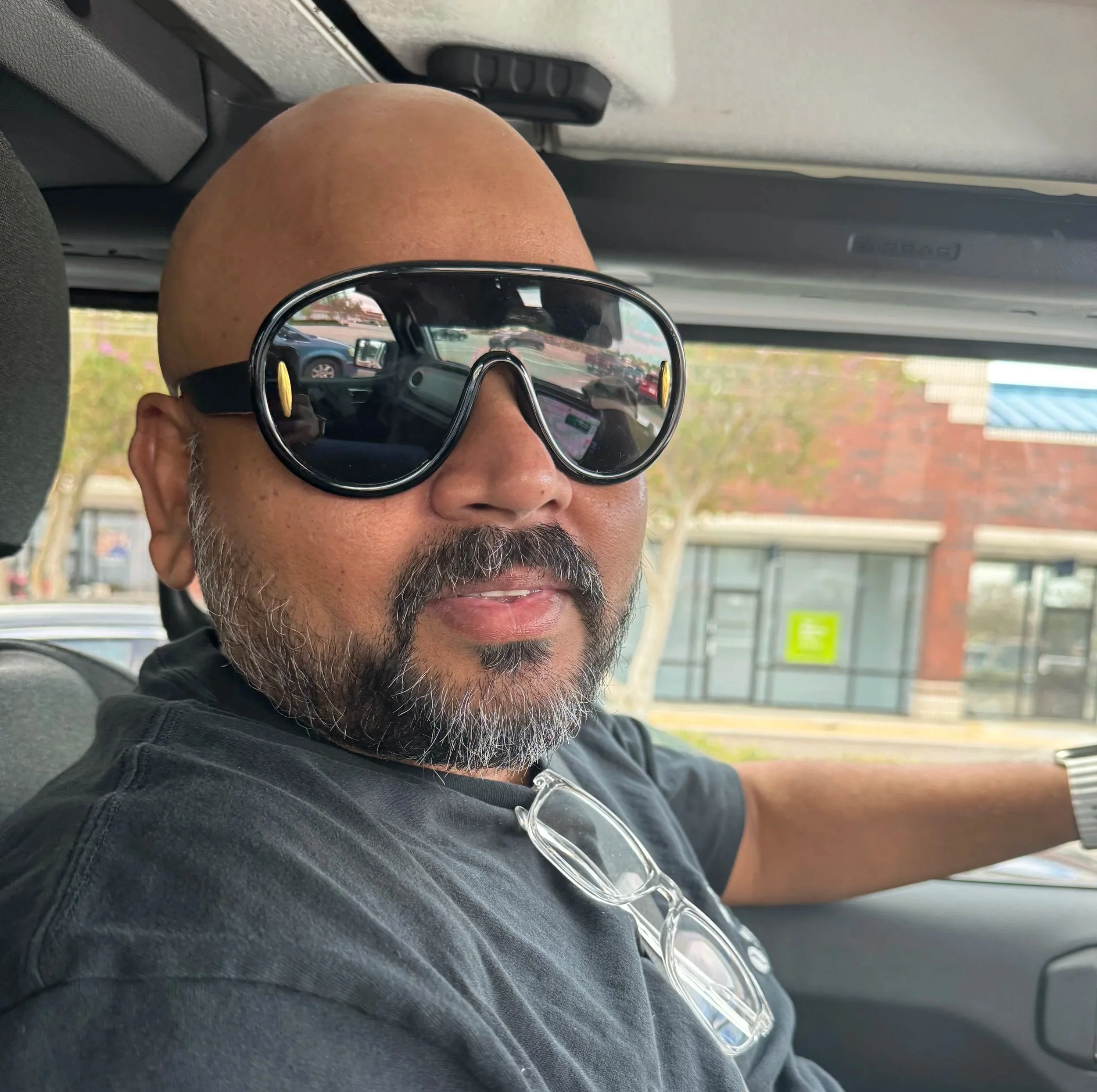
me with my funky glasses that Carmen bought for me
There is a category of consumer brand that crosses a line at some point in its life and stops being a product and starts being a sentence people say about themselves. Nike crossed it. Apple crossed it. Supreme crossed it. Hermès crossed it three generations before Supreme was born and is still on the right side of the line. The crossing is not an accident. It is the result of someone, usually one person sitting close to a founder, deciding that the brand will no longer apologize for being a brand.
Eyewear has never crossed that line at scale. Ray-Ban is closer than most. Warby Parker tried, ran out of cultural altitude somewhere around year nine, and is now a perfectly competent retailer of glasses. Gentle Monster came closest in our lifetime, made eyewear look like a contemporary art exhibition for about three years in K-beauty markets, and then plateaued. Oakley made eyewear about performance. Persol made it about old films. Ray-Ban made it about being slightly cooler than your friends. Nobody yet has made eyewear about being a generation. That is the unfilled chair.
I have spent twenty-five years doing other people's brands, mostly in retail, mostly at the intersection of digital and store, mostly at scale and mostly under pressure. JCPenney, Conn's, Chico's, Art Van, Ogilvy before all of it, Microsoft Hyderabad and Nike before that. CEO of SelectBlinds, $125 million to $220 million, exited successfully to PE. None of those brands crossed the line. None of them were positioned to. The work was honest, the numbers were good, and the lesson I keep returning to is this: scale without a brand POV is a logistics company.
Lenskart is the rare case where the logistics company is good enough to earn the right to become a brand. The supply chain is in place, the store footprint is past 2,500, the price-quality relationship is solved. The chair is open.
What would it actually take.
It would take an operator who treats culture as the input and category as the output. Not the other way around. The brand decides what is true, the category bends to it. That is the Apple lesson, the Nike lesson, the Hermès lesson. The CMO who made eyewear iconic would spend ten percent of her time looking at frames and ninety percent looking at K-pop, streetwear drops, gaming culture, regional memes, and emerging aesthetics. That is the Indian saying yathā dṛṣṭi tathā sṛṣṭi. As you see, so it manifests. The brand sees the culture it wants to belong to before the culture has noticed.
It would take an AI-native marketing operating system. Not AI-curious. Generative creative variants in production, predictive segmentation live, automated bidding rebuilt, computer vision wired into product discovery. A twenty-person team punching at the output of two hundred, because the AI is doing what a junior agency team used to do, and the human creatives are doing what no junior agency team ever could.
It would take a willingness to be Indian without apologizing for it. The next billion eyewear consumers do not live in Brooklyn. They live in Bengaluru, Jakarta, Riyadh, and Manila. The brand that wins this category will sound Indian to Indians, Arab to Arabs, Japanese to Japanese, and unmistakably itself in all three. Dharma is not the same as identity. The brand can adapt without diluting. It must.
It would take a founder who cares about brand as much as the operator does, which is rare enough that when you find one you stop sending your resume to other people.
I am writing this in public, with my name on it, because I would rather lose a job offer for being too direct than win one for being agreeable. The chair will be filled by someone. Someone will write the playbook for fashion-first eyewear at global scale, and the people who buy frames between 2027 and 2032 will tell their grandchildren about it. I would like to be the one who writes it. If not me, I will read what the person who does writes, and I will be glad they did.
Satya is the method. Seva is the strategy. Scale is the consequence.
Next: a piece on the operating system I would install in the first ninety days. The 20-person AI marketing machine, in practice.