When Alignment Is the Real Bottleneck

In 2004, I watched a product launch fail.
Not because the product was bad. Not because the market wasn't ready. Not because the engineering team lacked skill.
The product failed because the people building it could not agree on what "done" looked like.
Marketing wanted one thing. Engineering wanted another. Leadership wanted something else entirely. Every meeting ended with decisions that unraveled by the next meeting. Momentum bled out in conference rooms.
I was 24 years old, watching people twice my age drown in their own inability to align.
And I realized something I have never forgotten:
The bottleneck is rarely the work. The bottleneck is almost always the workers.
**The Invisible Tax**
Alignment problems are invisible to outsiders.
From the outside, a stalled company looks like it's struggling with competition, or capital, or product-market fit.
From the inside, it's simpler:
The left hand does not know what the right hand is building.
I have watched this tax compound across a dozen organizations:
At Microsoft, teams building adjacent features discovered their incompatibility six months into development. The code worked. The user experience didn't. No one had drawn the full journey.
At JCPenney, the digital team launched a BOPIS feature that stores could not execute. Marketing celebrated. Operations cursed. The customer suffered.
At SelectBlinds, I inherited an organization where manufacturing, marketing, and sales operated from completely different incentive structures. Manufacturing wanted predictability. Marketing wanted volume. Sales wanted flexibility. They were all right. And they were all fighting.
Alignment is not a soft skill. It is a structural discipline.
**Why Alignment Fails**
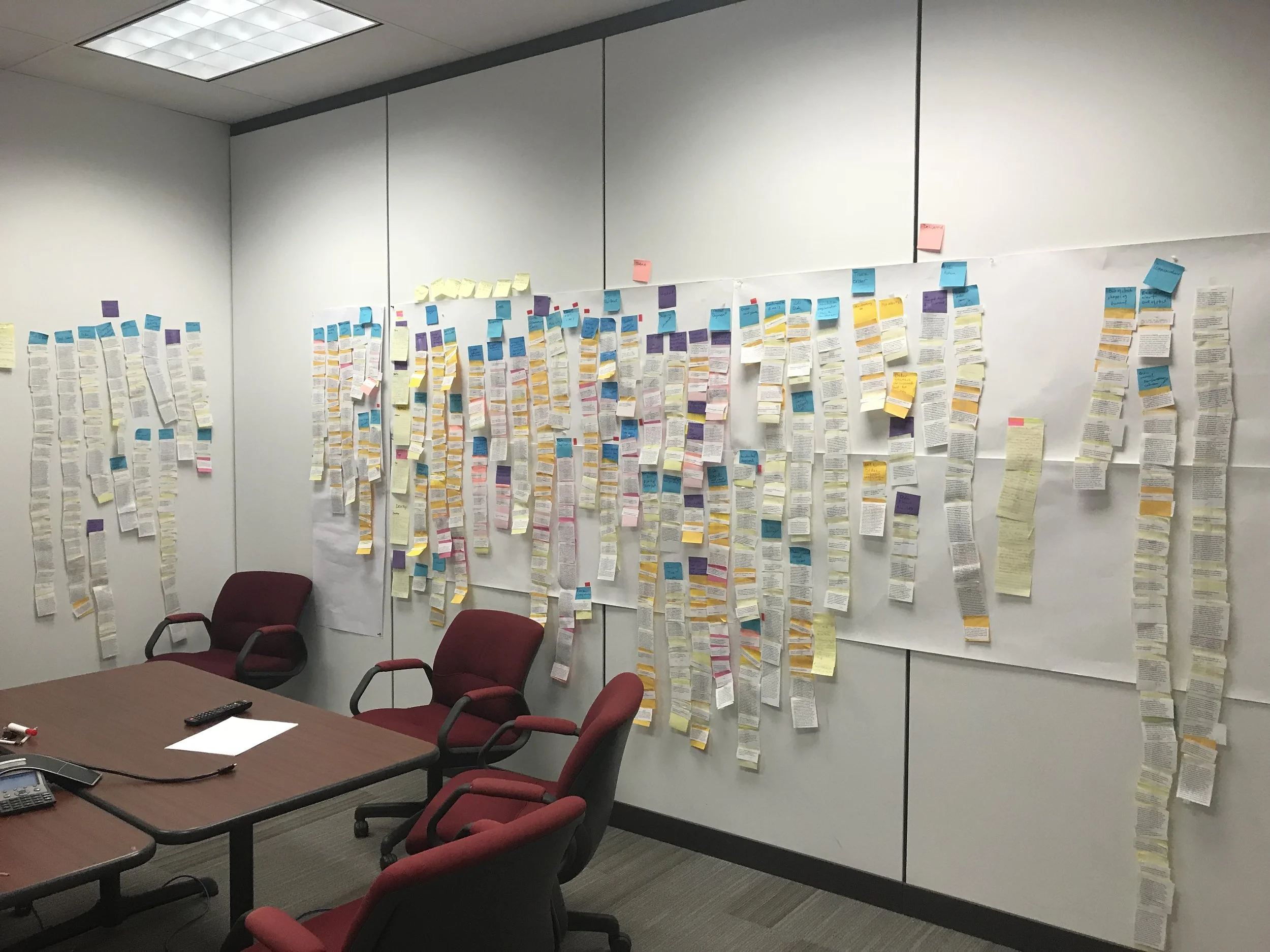
I have come to believe that alignment fails for four reasons, all of them human and none of them fixable by more meetings.
First: People protect their territory - Every leader has a domain. Every domain has boundaries. Those boundaries exist for good reason - accountability requires clarity. But boundaries also create blind spots. What happens in the space between domains belongs to no one. And no one means no one owns it.
Second: People speak different languages - Marketing talks in awareness and conversion. Engineering talks in latency and scalability. Finance talks in margin and payback. Operations talks in throughput and cost. These are not just different vocabularies. They are different worldviews. Translation is exhausting, so most teams stop trying and retreat to their silos.
Third: People have different time horizons - The sales leader needs this quarter. The product leader needs next year. The CEO needs both. These horizons create natural conflict that no amount of collaboration rituals can fully resolve. The tension is structural, not personal.
Fourth: People fear being wrong - Alignment requires exposing your assumptions to scrutiny. It requires saying "I could be wrong about this" in front of people who might remember. In organizations where vulnerability is punished—and most organizations punish it subtly—people protect their positions by refusing to align.
What I Learned to Do Differently - I did not learn this quickly. I learned it by failing repeatedly.
At Nike, I assumed alignment happened naturally if everyone was smart and well-intentioned. I was twenty-four and naive. Smart people with good intentions can build completely incompatible things while genuinely believing they are cooperating.
At Microsoft, I assumed process would solve it. Clear requirements. Stage gates. Approval matrices. I was wrong again. Process formalized disagreement without resolving it. It gave people more places to hide.
At Chico's, I finally started asking different questions:
Not "Do we agree?" but "What would have to be true for each of us to be right?"
Not "Can we compromise?" but "What outcome would make all of us successful?"
Not "Who wins?" but "What is the smallest decision we can make that unblocks the largest amount of work?"
Those questions changed everything.
**The Practice of Alignment**
By the time I reached SelectBlinds, I had stopped treating alignment as a meeting outcome. I started treating it as a daily discipline.
Three practices emerged that I now install everywhere I lead:
Write it down - Every decision worth making is worth documenting. Not in PowerPoint. In plain language that anyone can read six months later and understand exactly why the choice was made—and what assumptions it rested on.
Name the tension explicitly - When two leaders disagree, do not force a compromise that pleases no one. Name what each is protecting. Make the tradeoff visible. Then let the business decide which risk it prefers to take. Tension named is tension half-resolved.
Create shared scoreboards - If marketing is measured on traffic and operations is measured on cost, they will fight forever. It is not their fault. It is the system's fault. Find metrics that require both to succeed together. Unit economics. Customer satisfaction. Repeat rate. Force shared fate or accept perpetual friction.
**What Alignment Actually Is**
I have come to believe that alignment is not agreement.
Agreement is everyone thinking the same thing. That is rare and probably undesirable. Groupthink kills more companies than conflict ever will.
Alignment is everyone moving in the same direction even if they would have chosen a different path.
It is not intellectual consensus. It is behavioral coherence.
The teams that win are not the ones where everyone thinks alike. They are the ones where everyone, having argued their case and lost, commits fully to the chosen direction.
That commitment cannot be mandated. It must be earned through transparency, respect, and the knowledge that next time, the decision might go the other way.